我们相信,前沿人工智能的益处不应只集中在少数公司和资源充足的实验室。科学进步依赖于研究者提出正确的问题、测试新想法,并在他人发现的基础上继续探索。我们的角色是将强大的工具交到他们手中,并与他们合作设计模型,以加速他们的研究,同时让他们保持掌控。
我们推出“面向学术研究者的ChatGPT”计划,将为选定学术机构的10万名研究者免费提供我们的前沿模型。该计划将帮助科学、数学和工程领域的研究者应对高级问题、加速发现并提高生产力——从准备资助申请到检验假设。
我们今年夏天将从1万名研究者开始,高等研究院(IAS)和巴黎高等师范学院(ENS)等机构已可访问。我们计划到2027年扩展至10万名研究者。参与者将能使用我们的前沿模型,包括发布时的GPT‑5.6 Sol Pro,并可邀请所在机构最多四名合作者。工作区包含企业级隐私和安全保护,默认情况下数据不会用于训练我们的模型。研究者可使用工具和技能支持从基因组分析和蛋白质建模到文献综述、资助申请撰写和出版等工作。
该计划还包括培训、实践支持,以及向其他研究者学习并向我们提供反馈的机会。
对于已使用ChatGPT Edu的机构,通过本计划获得的免费访问将经由机构工作区协调。了解更多关于ChatGPT Edu以及OpenAI如何支持高等教育的信息。
“面向学术研究者的ChatGPT”是到2027年投入超过2.5亿美元支持外部科学研究和发现承诺的一部分。这包括NextGenAI——我们5000万美元支持研究机构的计划,以及我们与能源部Genesis Mission的合作,将前沿AI带给国家实验室和大学的研究者。这些努力共同反映了我们的信念:当更多研究者拥有追求自己想法的工具时,科学进步就会加速。
AI正在加速研究
AI正以超出许多人预期的速度成为更强大的研究工具。每周约有130万人使用ChatGPT进行高级科学和数学研究,产生约840万条消息。
这一转变在数学领域尤为明显。过去六个月中,AI已从偶尔用于孤立问题,转变为数学研究中更常规的部分。越来越多的论文现在承认ChatGPT的贡献,反映出研究者在其工作中采用这些工具的速度之快。
- 月份不完整;全文索引目前延伸至7月21日。
研究者在科学工作的几乎每个阶段都使用ChatGPT和Codex。ChatGPT帮助研究者审视想法、获取知识、生成假设并传达发现。Codex支持研究执行和形式分析,包括编写代码和分析结果。
按科学工作流程类别和产品划分的科研请求占比,2026年6月21日至7月20日
这些模式正在研究中显现。物理学家Rogerio Jorge及其团队正在使用AI开发开源聚变研究软件,该软件被行业和国家实验室用于设计聚变能源装置。在理论计算机科学领域,研究者Barna Saha、Yinzhan Xu和Christopher Ye使用GPT‑5.5 Pro开发了一个证明,确立了计算机解决高维几何问题的效率新极限,然后自行验证并完善了结果。
最密集使用这些工具的研究者也在承担更具雄心的任务。在其领域内AI使用率前20%的研究者,要求AI承担估计需要四小时或更长时间任务的概率几乎是同行的两倍:他们近7%的请求属于此类,而同一领域其他研究者仅为3.5%。
按估计主动工作时间与科学家AI强度划分的科研请求占比,2026年6月21日至7月20日
我们的策略不是决定哪些科学问题值得关注,或试图自行解决所有问题。而是将强大的工具交到研究界手中,让研究者去探索他们最了解的问题。
参与者将获得什么
参与者将免费获得我们前沿模型在ChatGPT、ChatGPT Work和Codex中的访问权限,包括发布时的GPT‑5.6模型系列。他们还将拥有扩展的深度研究、更高的使用限制和更大的上下文窗口。这些能力共同支持跨学科的科学推理、自主执行和研究工作流程。
GPT‑5.6 Terra在能力与效率之间取得平衡,适用于日常研究;GPT‑5.6 Luna为较轻量级任务提供更快的响应;GPT‑5.6 Sol则应对最困难的科学和数学问题。在衡量研究级数学推理的FrontierMath Tier 4上,GPT‑5.6 Sol得分为83%,而GPT‑5.5为72.5%。在评估复杂生物数据分析和科学推理的GeneBench Pro上,GPT‑5.6 Sol Pro解决了31.5%的任务。
研究者可以使用超过75种生命科学技能(在新窗口中打开),涵盖遗传学、基因组学、测序、单细胞分析、蛋白质建模和药物发现。连接器支持跨学科研究,提供对科学文献、公共基因组和临床数据库、卫星图像、计算笔记本、数据平台和参考文献管理工具的访问。
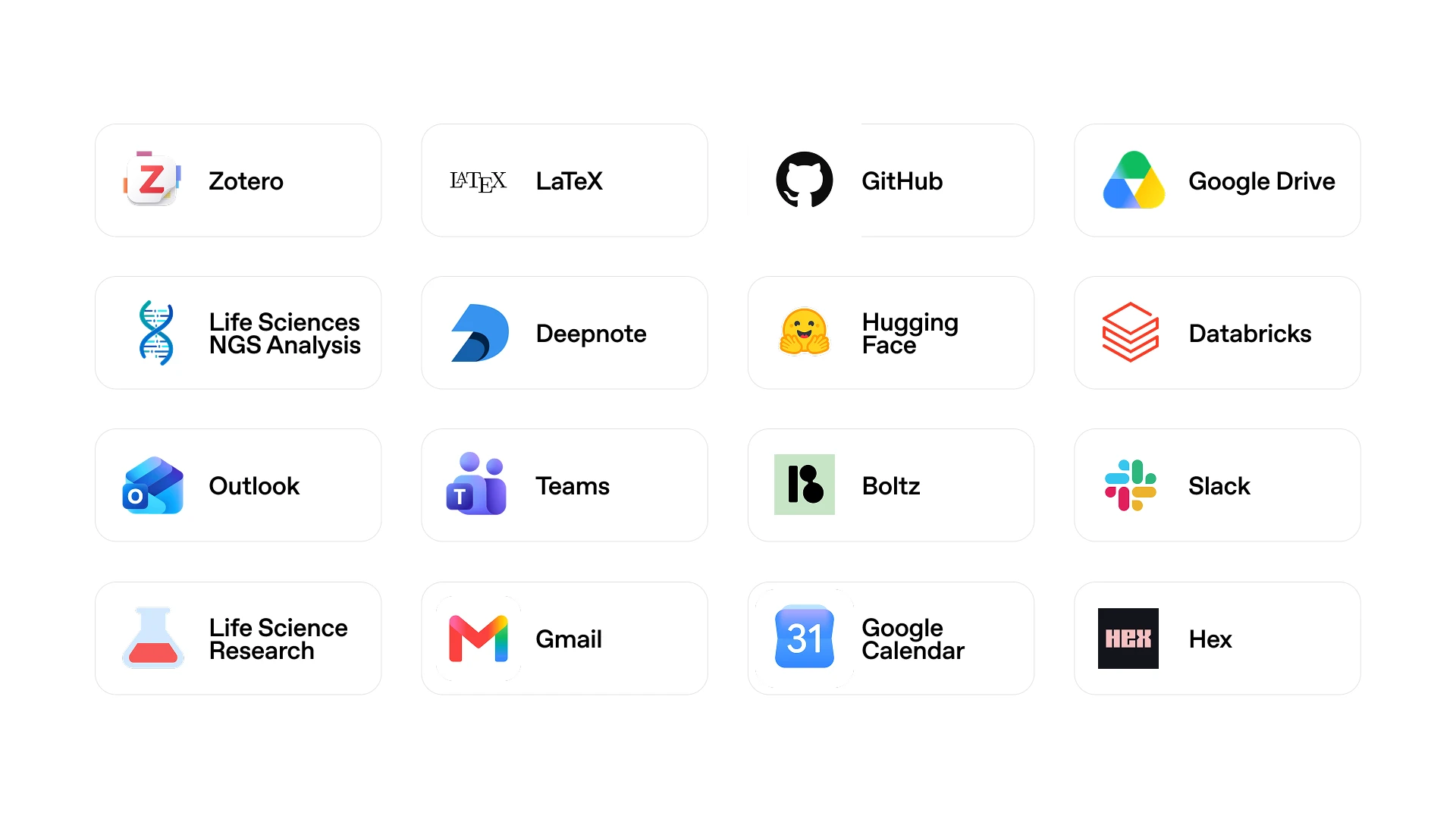
ChatGPT和Codex中可用的技能、连接器和工具的代表性示例。
Codex可帮助编写和调试代码、分析数据集以及构建可重现的工作流程。ChatGPT Work可支持更长的项目,例如寻找资助机会、准备资助申请、审阅文献、起草手稿以及创建传达结果的资料。
培训与研究支持
研究人员接触人工智能的起点各不相同。有些人可能是首次使用这些工具,而另一些人则可能正在其领域内开发高级应用。
该项目将提供针对不同经验水平的培训,涵盖从入门、优化工作流程到高级研究应用等环节。参与者将有机会接触熟悉研究流程的专家,并获得将这些工具融入工作的相关帮助。
随着我们观察到研究人员的发现,我们计划创造更多机会,让研究人员分享实用方法、相互学习,并展示跨学科的应用案例。他们的反馈将帮助我们了解模型的优势与不足,以及如何让模型对研究界更具价值。
如何申请
首批项目面向选定学术机构中符合条件的科研人员开放。符合条件的机构(在新窗口中打开)必须是经认可、可授予学位且研究活动活跃的高等院校。
申请人需验证其所属机构,并提供其当前活跃研究及预期科学用途的相关信息。获批的研究人员可邀请其所在机构内最多四名合作者。每位合作者也需验证其所属机构,并计入项目的总账户名额。
We believe the benefits of frontier AI should not be concentrated in a few companies and well-resourced labs. Scientific progress depends on researchers asking the right questions, testing new ideas, and building on what others have discovered. Our role is to put powerful tools in their hands—and work alongside them to design models that accelerate their research while keeping them in control.
We’re introducing ChatGPT for Academic Researchers, a program that will give 100,000 researchers at selected academic institutions free access to our frontier models. The program will help researchers across the sciences, mathematics, and engineering take on advanced problems, accelerate discovery, and improve productivity, from preparing grant applications to testing hypotheses.
We’re starting with 10,000 researchers this summer, with access already available at institutions such as the Institute for Advanced Study (IAS) and École normale supérieure (ENS). We plan to expand to 100,000 researchers through 2027. Participants will have access to our frontier models, including GPT‑5.6 Sol Pro at launch, and can invite up to four collaborators from their institution. Workspaces include business-grade privacy and security protections, and data is not used to train our models by default. Researchers can use tools and skills to support work ranging from genomic analysis and protein modeling to literature reviews, grant writing, and publishing.
The program also includes training, hands-on support, and opportunities to learn from other researchers and share feedback with us.
For institutions with ChatGPT Edu, free access granted through this program will be coordinated through the institution's workspace. Learn more about ChatGPT Edu and how OpenAI supports higher education.
ChatGPT for Academic Researchers is part of a commitment of more than $250 million through 2027 to support external scientific research and discovery. That includes NextGenAI, our $50 million initiative supporting research institutions, and our work with the Department of Energy’s Genesis Mission to bring frontier AI to researchers at national laboratories and universities. Together, these efforts reflect our belief that scientific progress accelerates when more researchers have the tools to pursue their own ideas.
AI is accelerating research
AI is becoming a more capable research tool faster than many expected. Each week, roughly 1.3 million people use ChatGPT for advanced science and mathematics, generating about 8.4 million messages.
The shift is especially visible in mathematics. In the past six months, AI has moved from occasional use on isolated problems to a more regular part of mathematical research. A growing number of papers now acknowledge ChatGPT’s contribution, reflecting how quickly researchers are adopting these tools in their work.
- Incomplete month; the full-text index currently extends through July 21.
Researchers use ChatGPT and Codex across nearly every stage of scientific work. ChatGPT helps researchers interrogate ideas, acquire knowledge, generate hypotheses, and communicate their findings. Codex supports research execution and formal analysis, including writing code and analyzing results.
Share of scientific research requests by scientific workflow category and product, June 21–July 20, 2026
These patterns are showing up in research. Physicist Rogerio Jorge and his team are using AI to develop open-source fusion research software used by industry and national laboratories to design fusion energy devices. In theoretical computer science, researchers Barna Saha, Yinzhan Xu, and Christopher Ye used GPT‑5.5 Pro to develop a proof establishing new limits on how efficiently computers can solve high-dimensional geometry problems, then validated and refined the results themselves.
Researchers using these tools most intensively are also taking on more ambitious work. Those in the top 20% of AI usage within their field are almost twice as likely as their peers to ask AI to take on tasks estimated to require four hours or more: nearly 7% of their requests, compared with 3.5% among other researchers in the same field.
Share of scientific requests by estimated active human work time and scientist AI intensity, June 21–July 20, 2026
Our strategy is not to decide which scientific problems deserve attention or try to solve them all ourselves. It is to put capable tools in the hands of the research community and let researchers pursue the questions they know best.
What participants will get
Participants will receive free access to our frontier models across ChatGPT, ChatGPT Work, and Codex, including the GPT‑5.6 family of models at launch. They will also have expanded deep research, higher usage limits, and larger context windows. Together, these capabilities support scientific reasoning, agentic execution, and research workflows across disciplines.
GPT‑5.6 Terra balances capability and efficiency for everyday research, GPT‑5.6 Luna provides faster responses for lighter-weight tasks, and GPT‑5.6 Sol tackles the most difficult scientific and mathematical problems. On FrontierMath Tier 4, which measures research-level mathematical reasoning, GPT‑5.6 Sol scores 83%, compared with 72.5% for GPT‑5.5. On GeneBench Pro, which evaluates complex biological data analysis and scientific reasoning, GPT‑5.6 Sol Pro solves 31.5% of tasks.
Researchers can use more than 75 life science skills(opens in a new window) spanning genetics, genomics, sequencing, single-cell analysis, protein modeling, and drug discovery. Connectors support research across disciplines, providing access to scientific literature, public genomic and clinical databases, satellite imagery, computational notebooks, data platforms, and reference managers.
Representative examples of skills, connectors, and tools available across ChatGPT and Codex.
Codex can help write and debug code, analyze datasets, and build reproducible workflows. ChatGPT Work can support longer projects such as finding funding opportunities, preparing grant applications, reviewing literature, drafting manuscripts, and creating materials to communicate results.
Training and research support
Researchers will have different starting points with AI. Some may be using these tools for the first time; others may be developing advanced applications in their fields.
The program will offer training tailored to different levels of experience, from getting started and improving workflows to advanced research applications. Participants will have access to specialists familiar with research workflows, including help integrating these tools into their work.
As we see what researchers discover, we plan to create more opportunities for researchers to share practical approaches, learn from one another, and highlight uses across disciplines. Their feedback will help us understand where our models are useful, where they fall short, and how to make them more valuable to the research community.
How to apply
The initial program is open to qualifying researchers at selected academic institutions. Eligible institutions(opens in a new window) must be recognized, degree-granting colleges or universities with a high level of research activity.
Applicants will need to verify their institutional affiliation and provide information about their active research and intended scientific use. Approved researchers may invite up to four collaborators from their institution. Each collaborator must also verify their affiliation and counts toward the program’s total number of accounts.
本文内容采集自官方网站,排版和翻译可能与原页面存在差异。
阅读官方全文