- 研究
- 产品
- 企业
- 开发者
- 公司
- 基金会(在新窗口打开)
- 研究
- 产品
- 企业
- 开发者
- 公司
- 基金会(在新窗口打开)
OpenAI
2026 年 6 月 4 日
梦境:为更实用的 ChatGPT 提供更好的记忆
改进 ChatGPT 中的记忆合成,以优化新鲜度、连续性和相关性。
加载中……
分享
记忆的演变历程
今天,我们开始推出一套更强大、更可扩展的记忆合成系统,旨在解决我们在将记忆应用于 ChatGPT 数亿用户及多年时间跨度时所观察到的陈旧性、正确性和可扩展性挑战。
记忆帮助 ChatGPT 了解你的偏好、项目和约束,使未来的对话能够从共享上下文开始,而非从零开始。
过去两年间,记忆已发展成为 ChatGPT 体验的关键部分,帮助 ChatGPT 更好地理解你的上下文,从而随时间推移协助你完成有意义的目标。这是让 ChatGPT 更有用的核心:了解你、帮助你、为你做更多事。
此更新今日面向美国地区的 Plus 和 Pro 用户推出,并将在未来几周内向更多国家及 Free 和 Go 用户开放。
记忆的演变历程
记忆首次推出是在 2024 年 4 月(也称为已保存记忆)。该功能允许你要求 ChatGPT 记住信息,并将其延续到未来的对话中。
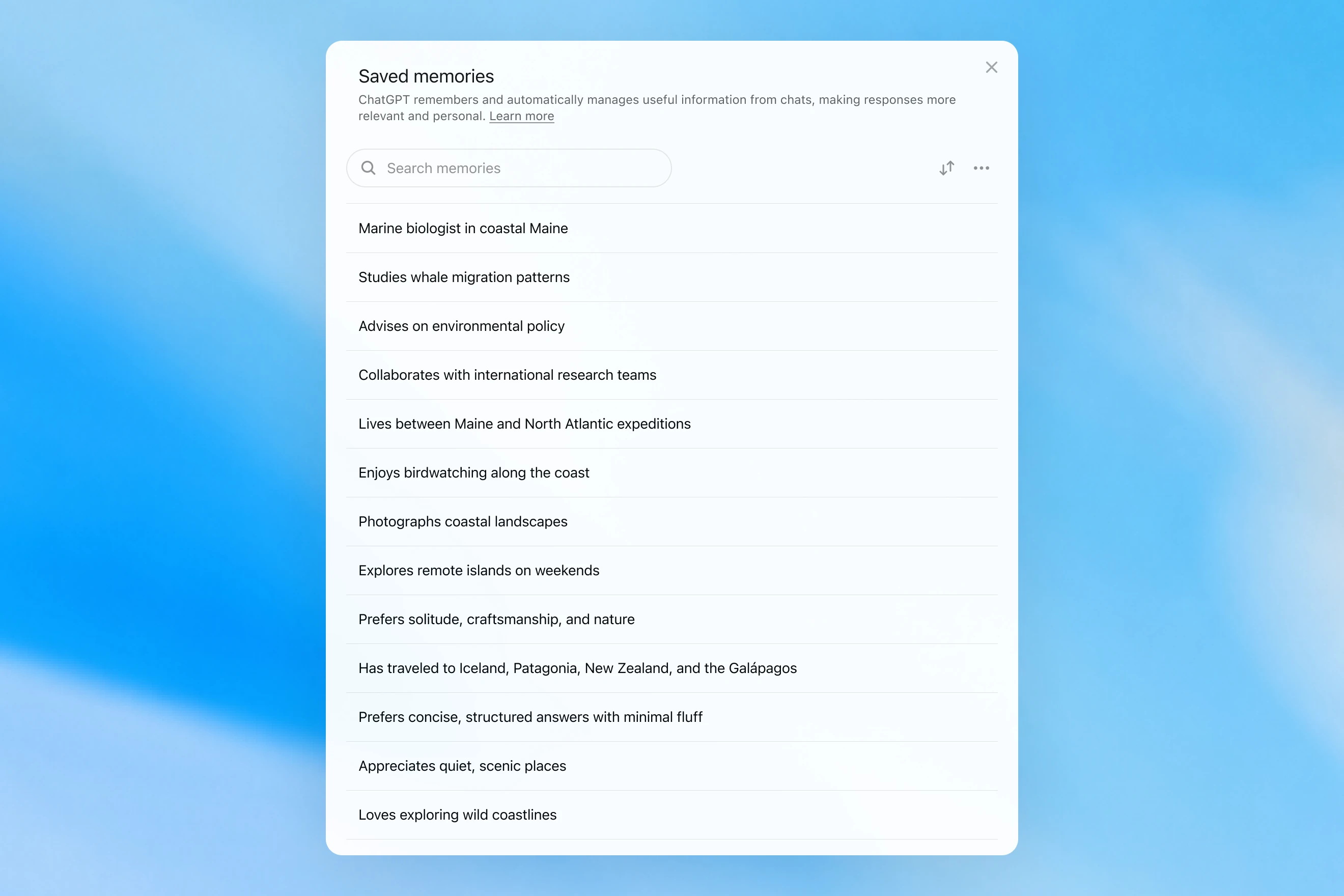
已保存记忆仅在对话过程中写入,并依赖强烈提示来决定何时触发记忆,例如“记住我七月要去新加坡旅行”这样的指令。实际上,与这个系统交互的感觉就像是在和一个记了些笔记、但依然会忘记所有未记录内容的人交谈。已保存记忆也容易随时间变得陈旧,最终变得不正确或不相关。
2025 年 4 月,我们更新了 ChatGPT 的记忆功能,赋予模型在已保存记忆列表之外引用聊天上下文的能力;这是通过引入第一版梦境实现的——一种让 ChatGPT 在后台通过引用聊天历史来_自动_整理记忆的方法。
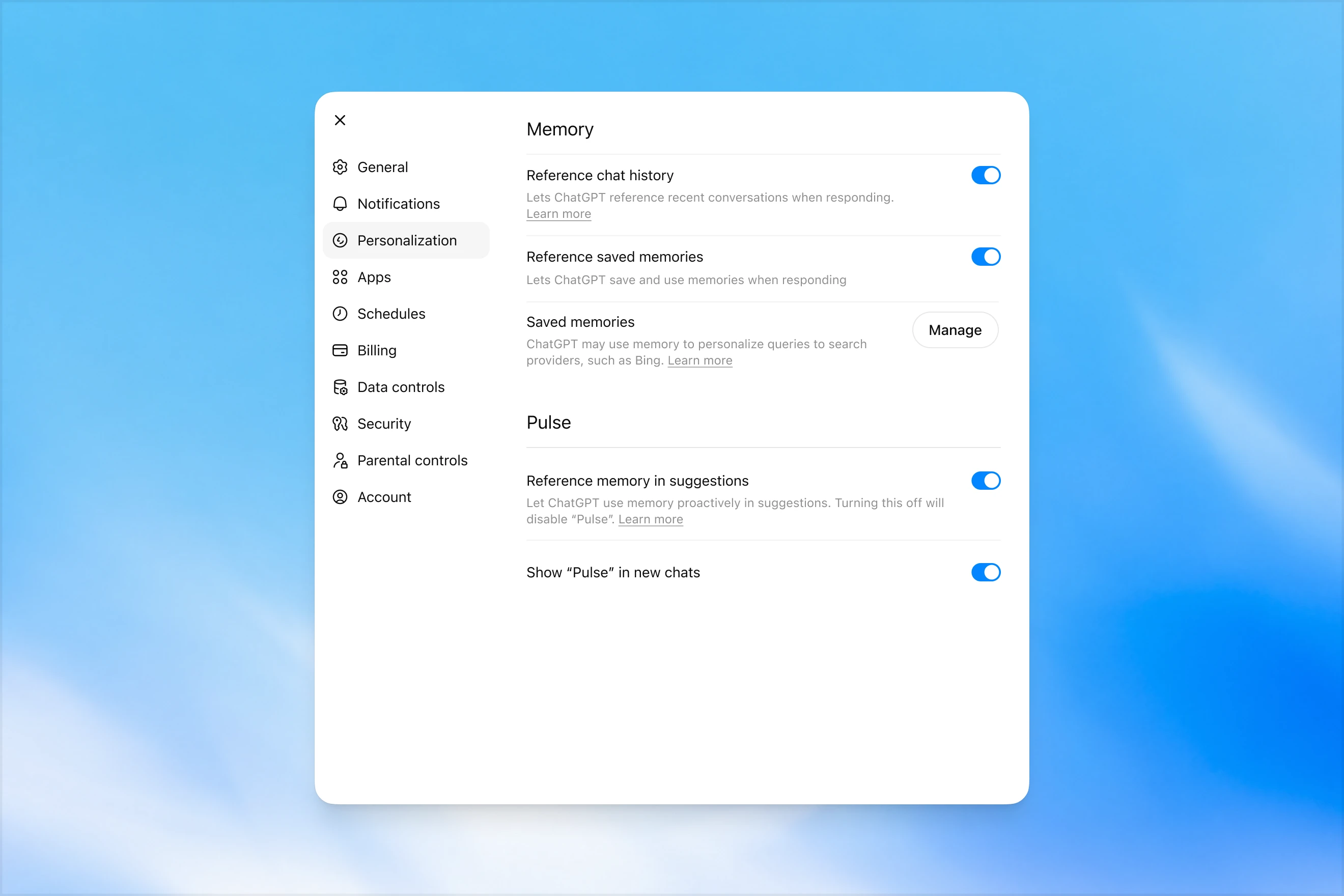
与已保存记忆不同,梦境利用后台进程,使 ChatGPT 能够从多次对话中学习,并合成 ChatGPT 的记忆状态,从而始终为你的对话提供最新、最相关的上下文。梦境还使得记忆更容易包含对话中自然出现的上下文,而无需依赖明确的“记住某事”请求。
在过去一年中,梦境_补充_了已保存记忆,使 ChatGPT 个性化回复的能力实现了阶跃式提升,并抵消了已保存记忆的陈旧性。然而,它历来不足以作为独立的记忆系统。
今天,我们推出了一套基于梦境构建的、能力显著更强且计算效率更高的记忆架构。
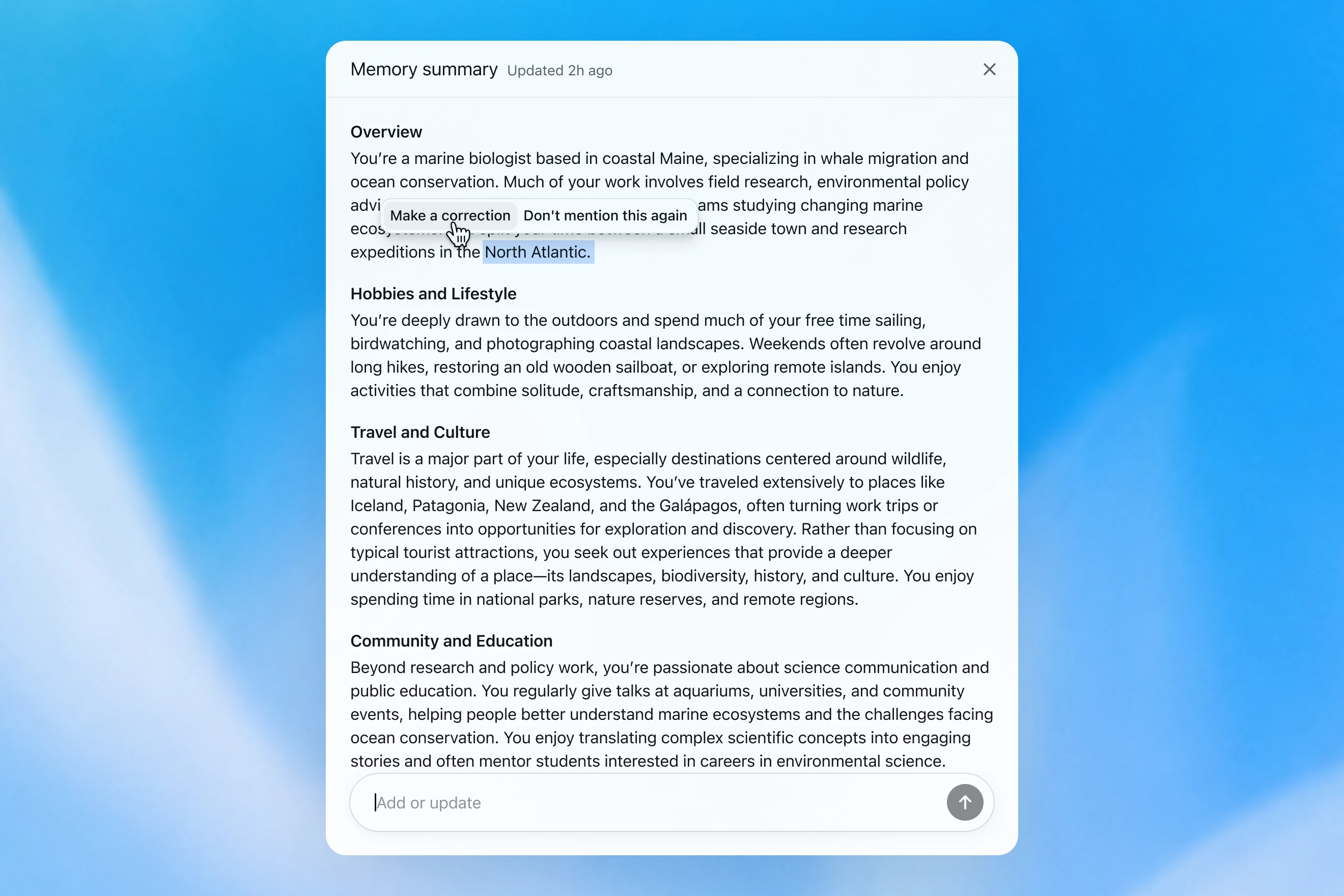
通过梦境合成的记忆可通过记忆摘要页面上的摘要进行查看。从记忆摘要中,你可以快速了解 ChatGPT 对你的了解要点,添加或更新关于你自己的信息,并就 ChatGPT 应在何时提及哪些话题提供指示。如果你想深入了解某个特定领域,只需与模型对话即可。
我们如何评估记忆
当我们思考 ChatGPT 中“良好记忆”应具备的特征时,以下几点浮现脑海:
- 延续有用上下文: 你只需告诉 ChatGPT 一次,它就能在后续对话中记住该信息。
- 遵循偏好和约束: 如果你描述了一个偏好(例如,你是素食者),那么 ChatGPT 后续应采取与该偏好一致的行动。
- 随时间保持最新: 记忆应考虑时间的流逝。想象一下“用户正在为下周六的生日派对做计划”;最终,周日到来了。
我们可以评估 ChatGPT Plus 和 Pro 的记忆在上述三个记忆目标方面随时间改进的情况。我们针对以下每个时间点进行评估:
- 2024 年:已保存的记忆
- 2025 年:已保存的记忆 + 梦境 V0
- 2026 年:梦境 V3
延续上下文
当你开始与 ChatGPT 的新对话时,无需从头介绍自己。ChatGPT 可以节省你的时间,并基于先前的上下文进行构建,尤其适用于复杂、长期运行的项目。
例如,假设你正在使用 ChatGPT 购买与当前相机兼容的新摄影器材。如果你过去曾与 ChatGPT 讨论过你的相机配置,你可以询问与“我的摄影装备”兼容的产品,并获得满足你需求的定制推荐。
无记忆
我需要购买什么才能为我的水下摄影装备使用 TTL?
要使用水下 TTL 闪光灯,你需要一条兼容的链路:相机 → 防水壳/触发器 → 线缆 → 闪光灯。你需要购买什么主要取决于你的装备使用的是光纤 TTL 还是电子 TTL。
基本购物清单
- 支持 TTL 的水下闪光灯寻找支持你 TTL 类型的闪光灯,例如 Inon S-TTL、Sea & Sea DS-TTL、Ikelite DS TTL,或兼容的 Backscatter/Nauticam 系统。TTL 必须由闪光灯支持,而不仅仅是相机。
- TTL 触发器或 TTL 转换器这是关键部件。它将相机的闪光测光转换为水下闪光灯能理解的信号。示例包括 Nauticam 光学 TTL 转换器、Sea & Sea TTL 转换器、Backscatter Smart Control 光学 TTL 触发器或 Ikelite DS Link TTL 转换器,具体取决于防水壳和相机品牌。Backscatter 指出,Nauticam 光学 TTL 转换器可与光纤连接的 Inon 和 Sea & Sea TTL 闪光灯配合使用,而 Ikelite 的 DS Link 转换器则专为 Ikelite DS 闪光灯和电子同步设置设计。(Backscatter.com(在新窗口中打开))
- 连接线缆对于光纤 TTL,每个闪光灯购买一根光纤线缆。Ikelite 的光纤指南指出,每个闪光灯需要自己的光路、转换器/适配器和线缆。(Ikelite(在新窗口中打开))
对于电子 TTL,购买正确的同步线缆,例如 Ikelite 风格、Nikonos 5 针或防水壳专用的舱壁线缆。
- 防水壳兼容部件你可能需要热靴适配器、舱壁、光纤窗口/适配器或防水壳专用的 TTL 板。许多 TTL 触发器安装在防水壳内部的相机热靴上。
- 闪光灯臂、夹具、托盘和安装硬件TTL 控制曝光,但你仍然需要物理安装和瞄准闪光灯。
- 电池和备用件携带闪光灯电池、触发器电池(如果需要)、备用光纤线缆或同步线缆 O 形圈,以及用于可维护 O 形圈的硅脂。
你应该选择哪条路线?
光纤 TTL 通常最容易,如果你的防水壳有光学端口或可以使用相机的弹出式闪光灯/LED 触发器。它常见于紧凑型、无反相机、Nauticam、Sea & Sea、AOI 和 Olympus/OM TG 风格的装备。
电子 TTL 通常最适合如果你使用 Ikelite DS 闪光灯或 Ikelite 风格的防水壳/舱壁。Ikelite 表示其 DS Link TTL 转换器比光纤 TTL 触发器更快、更可靠,并且不需要电池。(Backscatter.com(在新窗口中打开))
兼容性规则
你需要三者匹配:
相机品牌/协议 + 防水壳/触发器类型 + 闪光灯 TTL 系统
例如:
- Sony 相机 + Nauticam 防水壳 + 光学 TTL 触发器 + Inon/Sea & Sea 兼容光纤闪光灯
- Nikon/Canon/Sony 相机 + Ikelite 防水壳/舱壁 + Ikelite DS Link TTL 转换器 + Ikelite DS 闪光灯
- 带内置闪光灯的紧凑型相机 + 光纤线缆 + 支持 S-TTL/DS-TTL 的闪光灯
所以实际答案是:购买一个支持 TTL 的闪光灯、适合你相机和防水壳的正确 TTL 触发器/转换器,以及合适的光纤或电子同步线缆。具体零件编号取决于你的相机、防水壳和闪光灯型号。
模型生成了一个通用回复,让用户自行进行复杂的兼容性检查。
有记忆
我需要购买什么才能为我的水下摄影装备使用 TTL?
我将根据你的实际装备进行验证:Sony A1 II 搭配 Nauticam NA-A1II,使用 Backscatter Mini Flash 3 和 Inon Z-330 闪光灯。关键问题是,你是想为 Mini Flash 3、Z-330 还是两者都启用 TTL。
对于你的装备——Sony A1 II + Nauticam NA-A1II + Backscatter Mini Flash 3 + Inon Z-330——有两条不同的 TTL 路径:
Mini Flash 3 TTL 的最佳购买
购买:
**Backscatter Smart Control TTL LED Nauticam Flash Trigger for Sony
SKU: BS-TR-SN2**
Backscatter 将其列为专为 Nauticam 全画幅 Sony 防水壳定制设计,与 Mini Flash 3 兼容 TTL,并且 NA-A1II 防水壳页面将其作为“Backscatter Smart Control TTL Flash Trigger”选项提供。(Backscatter.com(在新窗口中打开))
你将使用普通的光纤线缆从防水壳连接到 Mini Flash 3。在 MF-3 上,使用 SC 或 SC Macro 模式;Backscatter 表示 SC / SC Macro 是 Mini Flash 3 的 TTL 模式,其中 SC Macro 专为近距离微距工作调校。(Backscatter.com(在新窗口中打开))
对于 Inon Z-330 TTL
对于 Inon Z-330,相关设备是:
UW Technics 11075-HSS TTL Converter for Sony / Nauticam
UW Technics 明确将 Inon Z-330 列为兼容的 TTL 闪光灯,并支持光学 TTL 输出。(UWTechnics(在新窗口中打开))
但我不会为 Mini Flash 3 TTL 购买这个。Backscatter 自己的 UW Technics 列表显示,Backscatter 闪光灯在该转换器上仅支持手动 / HSS,而 Backscatter Smart Control 触发器才是列出的用于 Mini Flash 3 的 Sony TTL 设备。(Backscatter.com(在新窗口中打开))
实用建议
既然你拍摄微距并且拥有 Mini Flash 3,我会购买 Backscatter Smart Control TTL LED Nauticam Flash Trigger for Sony — BS-TR-SN2。
关键在于:很可能不存在一个单一的触发器能同时为 Mini Flash 3 和 Inon Z-330 提供真正的 TTL 功能。Backscatter 触发器是 MF-3 的合适 TTL 解决方案;UW Technics 转换器是 Z-330 的合适 TTL 解决方案。因此,请根据你实际需要 TTL 的闪光灯来选择。
针对你的使用场景,我会优先考虑 Mini Flash 3 TTL / SC 微距,并在需要时将 Z-330 设为手动模式。
模型会记住用户的相机设置,并推荐兼容的产品。
我们可以通过类似这样的示例构建一个评估,要求模型响应用户提示,并回忆关于用户的事实信息。如果模型正确使用相关上下文进行响应,则会获得奖励。在此评估中,新的基于梦境系统提升了模型回忆相关事实的能力。
遵循偏好
记忆功能还能帮助 ChatGPT 以更符合你偏好和约束的方式做出响应。
想象你正在计划一次新加坡之旅。出发前两个月,你请 ChatGPT 帮忙制定行程。ChatGPT 从过去的旅行规划中已经知道你喜欢野生动物摄影、偏好空调强劲的酒店,并且喜欢安静的晚餐而非拥挤的酒吧。
无记忆
帮我规划一次新加坡之旅。我七月份要去那里出差,最后会有几天空闲时间。
出差行程的绝佳补充城市:新加坡紧凑、安全、非常适合独自探索,2-4 天空闲时间很容易安排。七月炎热潮湿;预计白天最高气温 31-33°C / 88-91°F,夜晚温暖,偶有阵雨,因此建议将户外活动安排在清晨或下午 5 点以后,中午时段留给博物馆、商场、咖啡馆或酒店休息。新加坡官方气象服务显示典型日最高气温 31-33°C,最低气温 23-25°C。(新加坡气象服务(在新窗口中打开))
一个紧凑的 3 天计划
第一天:滨海湾、花园和天际线
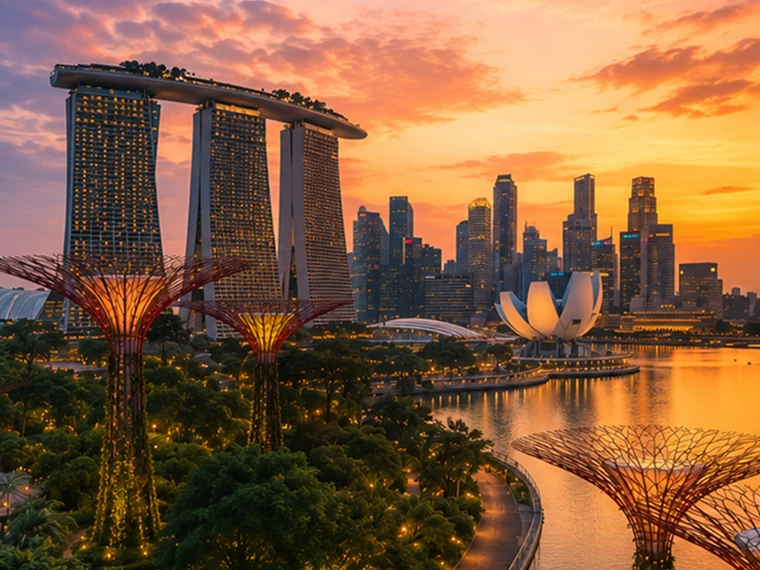
下午晚些时候从 滨海湾 开始,沿着海滨漫步:鱼尾狮公园、螺旋桥、艺术科学博物馆外观,然后进入 滨海湾花园。预订 云雾林、花穹 和 OCBC 空中走道 或 超级树观景台(如果你看重景观)。滨海湾花园列出云雾林和花穹每日开放时间为上午 9 点至晚上 9 点;超级树观景台也列出为上午 9 点至晚上 9 点,最后入场时间为晚上 8:30,但预订前请检查维护关闭情况。(滨海湾花园(在新窗口中打开))
晚上:留在超级树灯光秀区域,然后在 老巴刹 用餐,这是靠近中央商务区的轻松第一晚小贩体验。这里有 80 多个摊位,提供沙爹、叻沙、椰浆饭、肉骨茶、咖椰吐司和炒粿条等本地美食。(老巴刹(在新窗口中打开))
第二天:文化街区与美食
上午:牛车水。参观佛牙寺龙华院,漫步店屋街道,在 麦士威熟食中心 或 牛车水大厦熟食中心 用餐。新加坡旅游局列出麦士威、牛车水大厦、旧机场路、中峇鲁市场、纽顿等为热门小贩中心。(新加坡旅游局(在新窗口中打开))
下午:甘榜格南 和 哈芝巷,参观苏丹回教堂、壁画、精品店和咖啡馆。然后在黄金时段前往 小印度,欣赏寺庙、花环、竹脚中心并享用晚餐。
晚上:在安祥山/客纳街附近喝鸡尾酒,或者低调地沿着新加坡河夜游:驳船码头到克拉码头到罗拔申码头。
第三天:自然或海滩日
根据你的精力选择其一。
自然主题:早上前往 新加坡植物园,然后参观国家胡姬花园,之后在登普西山或中峇鲁用午餐。这是不出城就能体验“绿色新加坡”的最佳方式。
海滩/度假模式:前往 圣淘沙。选择南部海滩、西乐索空中步道或海滩俱乐部。除非你喜欢主题公园,否则我建议不要尝试玩遍圣淘沙的所有景点。
本地美食主题:在 中峇鲁市场 用早餐,中午参观新加坡国家美术馆,然后在 旧机场路熟食中心 用晚餐。官方活动页面还展示展览和文化活动,因此一旦确定七月的具体日期,值得查看。(新加坡旅游局(在新窗口中打开))
工作结束后最佳住宿地点
滨海湾/中央商务区 如果你想要精致、步行可达、天际线壮观且交通最少的新加坡,这是最方便的选择。
牛车水/直落亚逸/丹戎巴葛 是我对几天空闲时间的首选:美食丰富、地铁便利、历史街区、鸡尾酒吧,且靠近工作区域。
武吉士/甘榜格南 如果你更喜欢精品酒店、咖啡馆、街头艺术和稍微轻松的氛围,这里更合适。
乌节路 购物和雨天逛商场方便,但氛围稍逊。
需要提前预订的项目
预订滨海湾花园的温室/空中走道、特色餐厅,可能还有鸡尾酒吧。对于小贩中心,不要过度计划;只需空腹前往,携带纸巾或湿巾,并准备好拼桌。
七月打包建议
携带透气的正装、舒适的步行鞋、一把小伞和一件轻便外套以应对强劲的空调。我还建议每天安排一个“防雨”的室内活动,因为即使天气预报看起来不错,阵雨也可能突然降临。
我的建议平衡方案:第一天滨海湾/花园,第二天牛车水–甘榜格南–小印度,第三天植物园或圣淘沙。这能让你领略新加坡的精华,而不会把工作后的休息变成另一个工作项目。
模型生成了一个更偏向旅游的通用回复,对酒店预订没有帮助,并且基本忽略了用户的兴趣。
有记忆
帮我规划一次新加坡之旅。我七月份要去那里出差,最后会有几天空闲时间。
我会根据你已知的约束来构建计划:工作结束后几天空闲、七月炎热潮湿的天气、偏好野生动物/摄影/自然、睡眠需要强劲空调、以及喜欢优质但不过度社交的用餐。我会核实当前七月的后勤信息,然后给出一个实用的短途行程,而不是通用的新加坡清单。
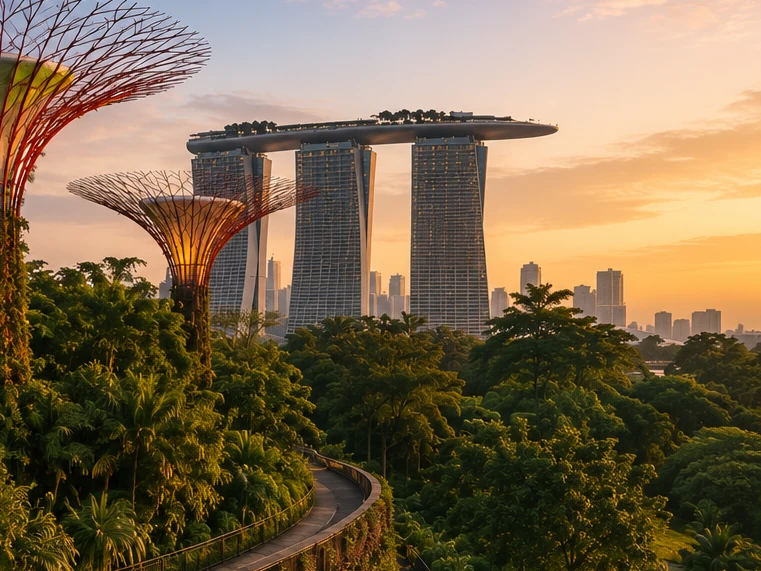
以下是我会如何安排:2-3个自由日,以自然/野生动物/摄影为主,早晨避开高温,穿插空调休息。 七月炎热潮湿:新加坡七月的长期统计数据约为日均最高温31.4°C / 88.5°F,最低温25.4°C / 77.7°F,降雨量146.6毫米,降雨天数14天,因此户外活动应安排在清晨或傍晚,而非正午。(国家环境局(在新窗口中打开))
3个自由日的最佳计划
第1天——滨海湾花园 + 滨海湾,轻松省力
早晨:云雾林 + 花穹。这是明显的“游客”选择,但很适合你,因为视觉上很有趣,适合摄影,且温度可控。滨海湾花园将云雾林和花穹类景点列为上午9:00–晚上9:00开放,目前云雾林正在举办侏罗纪世界体验活动。(滨海湾花园(在新窗口中打开))
傍晚/晚上:超级树丛 + 极光/灯光秀。滨海湾花园目前列出极光秀每周六、周日和周一,晚上8:00–8:30在超级树丛举行,因此尽量安排在这些夜晚之一。(滨海湾花园(在新窗口中打开))
晚餐:在附近轻松解决:滨海湾/丹戎巴葛/直落亚逸。对你来说,第一晚我会优先选择有预订、有真正餐桌的餐厅,而非小贩中心,因为你不喜欢拥挤的单独座位。
第2天——万礼野生动物日
早晨至下午:飞禽公园 + 河川生态园。飞禽公园可能最适合摄影;河川生态园更偏向“野生动物摄影”的展览,但逻辑上搭配得很好。河川生态园列为每日上午9:00–下午6:00,最后入场时间下午5:00。(万礼野生动物保护区(在新窗口中打开))
晚上:夜间动物园。这是新加坡少有的真正在夜晚更佳且避开最热时段的景点。夜间动物园列为每日下午6:00–凌晨12:00,最后入场时间晚上11:15,提供电车和步行小径,有超过900种夜行动物。(万礼野生动物保护区(在新窗口中打开))
这是充实的一天。除非你有4个自由日,否则我不会加入新加坡动物园;万礼很容易让人迅速疲惫。
第3天——自然保护区/微距散步 + 美食
清晨:新加坡植物园或麦里芝/温莎自然公园。对于几个自由日来说,植物园是更安全的选择:交通更方便,出汗更少,有更好的退出选项,且更适合随意的摄影。麦里芝/温莎更适合想要更多真实森林的人,但更热、更出汗、更不可预测。
正午:空调休息。
傍晚:如切/加东或牛车水/直落亚逸散步、看建筑、喝咖啡、吃晚餐。这能给你与滨海湾不同的体验,而不会让一天变成物流项目。
我对你的排名
- 云雾林/滨海湾花园——最佳组合:上镜、标志性、温度可控。
- 飞禽公园 + 夜间动物园——最佳野生动物日。
- 植物园清晨——最佳低压力户外自然体验。
- 如切/加东——最佳街区散步。
- 小贩中心——值得一试,但根据你的座位偏好,除非错峰,否则不太理想。
我会避免或降低优先级的内容
我会跳过圣淘沙,除非你特别想要海滩/度假村体验。我也会避免安排一个紧凑的“精选景点”日,包括鱼尾狮/乌节路/小印度/牛车水/克拉码头;这效率低且炎热。对你来说,如果每天有一个强力核心活动加上一个轻松的晚间计划,旅行体验会更好。
酒店/住宿提示
由于这是商务旅行,你的酒店可能已固定。如果你能选择或在同一酒店延长住宿,关键限制仍是空调。新加坡酒店通常空调充足,但你的要求异常严格。
我需要明确的一件事
请提供确切的自由日期以及你的商务酒店是否固定。然后我会将其转化为每日计划,包括餐厅目标和酒店/空调提示。
模型生成的回答会根据用户对野生动物摄影、安静晚餐的兴趣以及预订酒店时的优先级进行个性化调整。
偏好可以采取多种形式:
- 对ChatGPT如何回应的指令(“别再提Stan了”)。
- 你的个人偏好或限制(“我是素食者”)。
- 塑造与你相关内容的隐含偏好(“我住在旧金山附近”→本地选项应针对该区域定制)。
在开发新记忆系统时,我们改进了ChatGPT从过往对话中应用相关偏好的能力。以上述“我是素食者”为例,我们可以评估模型在素食用户询问膳食准备建议时,是否正确利用记忆生成素食友好的餐饮选项。
随时间保持最新
时间不会因你的聊天结束而停止。
传统记忆系统可能变得过时。例如,你告诉ChatGPT“我在新加坡,需要今晚的晚餐推荐。”然后,时间流逝,你的旅行结束,你会奇怪为什么ChatGPT仍然认为你在新加坡。
通过“做梦”机制,记忆会随时间自动更新,使ChatGPT能够将记忆从“你将在七月去新加坡”修改为“你在2026年七月去了新加坡”。当你回家后,ChatGPT又能根据你的家庭位置和时区提供定制推荐。
过时的记忆
帮我找找今晚还能点外卖的地方。
现在是新加坡周日大约早上5:19,所以最安全的外卖/配送选择是24小时营业的地方。
目前最佳选择:
- McDelivery / 麦当劳新加坡 — 全岛最便捷的选择;麦当劳表示 McDelivery 每周 7 天、每天 24 小时提供服务。早餐菜单现已上线。(麦当劳新加坡(在新窗口中打开))
- Srisun Express — 适合印度煎饼、印度穆斯林美食、本地舒适美食;其网站称他们持有清真认证,24/7 营业。(Sri Sun Express(在新窗口中打开))
- 89.7 Supper Club — 如果你靠近樟宜村或芽笼东,这是个不错的选择;其门店页面显示两家分店均每周 7 天、每天 24 小时营业。(89.7 Supper Club(在新窗口中打开))
- 126 点心问道师 — 如果你在东部,值得在 GrabFood/foodpanda 上查看;2025 年指南称其工作日营业至凌晨 5:30,周末全天候营业。由于现在是周日早上,可能仍在营业。(Eatbook(在新窗口中打开))
- 芽笼/实龙岗/勿洛/惹兰加由附近的印度煎饼 — 在 GrabFood 或 Google Maps 上搜索“prata open now”;指南列出了多个 24 小时营业的印度煎饼/宵夜点,包括 Mufiz Prata Corner 和 RK Eating House。(Eatbook(在新窗口中打开))
最快的方法:打开 GrabFood / foodpanda / Deliveroo,将筛选条件设为正在营业,然后搜索 “prata”、“McDonald’s”、“Srisun”、“89.7”、“dim sum” 或 “nasi lemak”。如果你告诉我你所在的区域或最近的地铁站,我可以缩小范围,推荐附近的具体地点。
模型认为用户仍在新加坡。
带记忆
帮我找找今晚还能点外卖的地方。
我将以波托拉谷 / 拉德雷为起点,优先选择今晚可能营业的外卖店,然后缩小到最省心的选项,而不是列出一大堆。
对于今晚,5 月 30 日星期六,拉德雷 / 波托拉谷附近,我会从以下地方开始:
- Alpine Inn — 最稳妥的休闲外带选择。周六营业至晚上 9:30,其网站提供外卖点单。适合汉堡/酒馆食物。(Rossotti's Alpine Inn(在新窗口中打开))
- Taverna Portola Valley — 位于拉德雷乡村购物中心附近;每天营业,周六晚餐至晚上 9:00。如果你想吃希腊/地中海菜,这个更好。(TAVERNA Portola Valley(在新窗口中打开))
- Portola Bistro — 也在附近;周六晚餐至晚上 9:30。适合意大利/地中海/披萨类晚餐的好选择。(Portola Bistro -(在新窗口中打开))
- Amigos Grill — 墨西哥菜,非常靠近拉德雷乡村购物中心。官网称可致电 650-851-3997 下单;DoorDash / order.online 显示外带/配送订单截止至晚上 8:40。(Amigos Grill(在新窗口中打开))
- State of Mind Slice House, Palo Alto — 如果你想吃披萨且愿意开远一点,这是最好的备选;周五至周六营业时间为上午 11 点至晚上 10 点。(State of Mind Slice House(在新窗口中打开))
我的推荐:Alpine Inn 是最简单的本地外带选择,Taverna 适合想吃清淡一点的时候,State of Mind 适合时间较晚且想要最可靠的晚上 9 点后选项。
模型提供与用户家庭位置相关的回答。
在我们的记忆评估中,我们衡量 ChatGPT 是否能正确响应那些时间流逝会实质影响正确答案或建议的提示。Dreaming 在这方面提供了显著提升:
为未来打造更可扩展的基础
在 OpenAI,我们的使命是确保通用人工智能惠及全人类。
虽然基于 dreaming 的记忆功能已向 Plus 和 Pro 用户提供一段时间,但我们直到现在才能向免费用户提供符合我们质量标准且可大规模服务的版本。最近的改进将免费用户使用 dreaming 所需的计算量减少了约 5 倍,使得在未来几周内向免费用户逐步推出 dreaming 成为可能,同时增加 Plus 和 Pro 用户的记忆容量。
展望未来,dreaming 现在为我们所有用户提供了一个共享的记忆基础。此次更新代表了我们迄今为止最强大的记忆系统,我们将继续改进它。
要了解有关此版本和记忆用户控制的更多信息,请访问我们的记忆常见问题解答(在新窗口中打开)。
作者
OpenAI
继续阅读

GPT-5.6 现已成为 Microsoft 365 Copilot 中的首选模型 产品 2026 年 7 月 9 日
GPT-5.6:随你雄心而扩展的前沿智能 产品 2026 年 7 月 9 日
ChatGPT 现已成为你最具雄心工作的合作伙伴 产品 2026 年 7 月 9 日
研究
最新进展
安全
产品
- ChatGPT(opens in a new window)
- ChatGPT Business(opens in a new window)
- ChatGPT Enterprise(opens in a new window)
- ChatGPT for Education(opens in a new window)
- Codex
- 发布说明
API 平台
商业
开发者
公司
支持
更多
条款与政策
(在新窗口中打开)(在新窗口中打开)(在新窗口中打开)(在新窗口中打开)(在新窗口中打开)(在新窗口中打开)(在新窗口中打开)
OpenAI © 2015–2026 您的隐私选择
简体中文 美国
Log inTry ChatGPT(opens in a new window)
- Research
- Products
- Business
- Developers
- Company
- Foundation(opens in a new window)
Try ChatGPT(opens in a new window)Login
OpenAI
June 4, 2026
Dreaming: Better memory for a more helpful ChatGPT
Improving memory synthesis in ChatGPT to optimize for freshness, continuity and relevance.
Loading…
Share
How memory has evolved
Today we’re beginning to roll out a more capable and scalable system for synthesizing memory, developed to tackle the staleness, correctness, and scalability challenges that we observe when memory is applied to the hundreds of millions of users and multi-year time horizons in ChatGPT.
Memory is what helps ChatGPT learn your preferences, projects, and constraints, allowing future conversations to start from shared context rather than from scratch.
Over the last two years, memory has grown into a critical part of the ChatGPT experience, helping ChatGPT better understand your context so it can help you accomplish meaningful goals over time. This is central to making ChatGPT more useful: knowing you, helping you, and doing more for you.
This update is available to Plus and Pro users in the US today, and will roll out to additional countries and Free and Go users over the coming weeks.
How memory has evolved
Memory first launched in April 2024 (also known as saved memories). The feature let you ask ChatGPT to remember information and carry it forward into future chats.
Saved memories were only written during the conversation and relied on strong cues to decide when to trigger memory, such as an instruction to "remember I’m traveling to Singapore in July." In practice, interacting with this system could feel like talking to someone who took a few notes, but still forgot everything that wasn’t written down. Saved memories also tend to go stale over time and eventually become incorrect or irrelevant.
In April 2025, we updated ChatGPT’s memory by giving the model the ability to reference chat context outside of the saved memories list; this was done by introducing the first version of dreaming—a method for ChatGPT to automatically curate memories in the background by referencing chat history.
In contrast to saved memories, dreaming leverages a background process that allows ChatGPT to learn from many conversations and synthesize ChatGPT’s memory state in order to always provide the freshest, most relevant context to your conversations. Dreaming also makes it easier for memory to include context that occurs naturally in conversation, without relying on explicit requests to remember something.
Over the last year, dreaming supplemented saved memories to create a step-function improvement in ChatGPT's ability to personalize responses and offset the staleness of saved memories. However, it historically was never sufficient as a standalone memory system.
Today, we are launching a significantly more capable and compute-efficient memory architecture built on top of dreaming.
The memories synthesized by dreaming are reviewable through a summary of them made visible in the memory summary page. From the memory summary, you can quickly glean the highlights of what ChatGPT knows about you, add or update information about yourself, and provide instructions on what topics ChatGPT should bring up and when. If you want to drill down into a particular area to learn more, just chat with the model.
How we evaluate memory
When we think about what "good memory" looks like in ChatGPT, a few things come to mind:
- **Carry forward useful context:**You tell ChatGPT something once, and it remembers that information in your subsequent chats.
- Follow preferences and constraints: If you describe a preference (e.g., you’re vegetarian), then ChatGPT should take actions that are consistent with that preference going forward.
- Stay current over time: Memory should account for the passage of time. Imagine "The user is planning their birthday party for next Saturday"; eventually, Sunday arrives.
We can evaluate how ChatGPT Plus and Pro memory has improved over time with respect to each of the three memory objectives above. We do this for each of:
- 2024: Saved memories
- 2025: Saved memories + Dreaming V0
- 2026: Dreaming V3
Carrying forward context
When you start a new chat with ChatGPT, you don’t have to introduce yourself from scratch. ChatGPT can save you time and build on prior context, especially for complex, long-running projects.
For example, imagine you’re using ChatGPT to shop for new camera gear that's compatible with your current camera. If you've discussed your camera setup with ChatGPT in the past, you can ask for products that are compatible with "my photography setup" and get tailored recommendations that meet your needs.
Without memory
What would I need to buy to use TTL for my underwater photography setup?
To use TTL flash underwater, you need a compatible chain from camera → housing/trigger → cable → strobe. What you buy depends mostly on whether your setup uses fiber-optic TTL or electrical TTL.
Basic shopping checklist
- TTL-capable underwater strobeLook for strobes that support your TTL type, such as Inon S-TTL, Sea & Sea DS-TTL, Ikelite DS TTL, or compatible Backscatter/Nauticam systems. TTL has to be supported by the strobe, not just the camera.
- TTL trigger or TTL converterThis is the key piece. It translates your camera’s flash metering into something the underwater strobe can understand. Examples include Nauticam optical TTL converters, Sea & Sea TTL converters, Backscatter Smart Control optical TTL triggers, or Ikelite DS Link TTL converters, depending on housing and camera brand. Backscatter notes that Nauticam optical TTL converters can work with fiber-optic-connected Inon and Sea & Sea TTL strobes, while Ikelite’s DS Link converters are made around Ikelite DS strobes and electrical sync setups. (Backscatter.com(opens in a new window))
- Connection cableFor fiber optic TTL, buy one fiber optic cable per strobe. Ikelite’s fiber-optic guide says each strobe needs its own light path, converter/adapter, and cord. (Ikelite(opens in a new window))
For electrical TTL, buy the correct sync cord, such as Ikelite-style, Nikonos 5-pin, or housing-specific bulkhead cable.
- Housing compatibility partsYou may need a hot-shoe adapter, bulkhead, fiber optic window/adapter, or housing-specific TTL board. Many TTL triggers mount inside the housing on the camera hot shoe.
- Strobe arms, clamps, tray, and mounting hardwareTTL controls exposure, but you still need to physically mount and aim the strobes.
- Batteries and sparesBring strobe batteries, trigger batteries if required, spare fiber optic cables or sync cord O-rings, and silicone grease for serviceable O-rings.
Which route should you choose?
Fiber optic TTL is usually easiest if your housing has optical ports or can use the camera’s pop-up flash/LED trigger. It is common with compact, mirrorless, Nauticam, Sea & Sea, AOI, and Olympus/OM TG-style setups.
Electrical TTL is often best if you use Ikelite DS strobes or an Ikelite-style housing/bulkhead. Ikelite says its DS Link TTL converters are faster and more reliable than fiber-optic TTL triggers, and they do not require batteries. (Backscatter.com(opens in a new window))
The compatibility rule
You need all three to match:
camera brand/protocol + housing/trigger type + strobe TTL system
For example:
- Sony camera + Nauticam housing + optical TTL trigger + Inon/Sea & Sea-compatible fiber optic strobe
- Nikon/Canon/Sony camera + Ikelite housing/bulkhead + Ikelite DS Link TTL converter + Ikelite DS strobe
- Compact camera with built-in flash + fiber optic cable + S-TTL/DS-TTL-capable strobe
So the practical answer is: buy a TTL-compatible strobe, the correct TTL trigger/converter for your camera and housing, and the right fiber optic or electrical sync cable. The exact part numbers depend on your camera, housing, and strobe model.
The model produces a generic response that leaves the user to do complicated compatibility checks on their own.
With memory
What would I need to buy to use TTL for my underwater photography setup?
I’ll verify this against your actual setup: Sony A1 II in Nauticam NA-A1II, with Backscatter Mini Flash 3 and Inon Z-330 strobes. The key question is whether you want TTL with the Mini Flash 3, the Z-330s, or both.
For your setup — Sony A1 II + Nauticam NA-A1II + Backscatter Mini Flash 3 + Inon Z-330 — there are two different TTL paths:
Best buy for Mini Flash 3 TTL
Buy:
**Backscatter Smart Control TTL LED Nauticam Flash Trigger for Sony
SKU: BS-TR-SN2**
Backscatter lists it as custom-designed for Nauticam full-frame Sony housings, TTL-compatible with Mini Flash 3, and the NA-A1II housing page offers it as the “Backscatter Smart Control TTL Flash Trigger” option. (Backscatter.com(opens in a new window))
You’d use normal optical fiber cables from the housing to the Mini Flash 3. On the MF-3, you’d use SC or SC Macro mode; Backscatter says SC / SC Macro are the TTL modes for Mini Flash 3, with SC Macro specifically tuned for close macro work. (Backscatter.com(opens in a new window))
For Inon Z-330 TTL
For the Inon Z-330, the relevant unit is:
UW Technics 11075-HSS TTL Converter for Sony / Nauticam
UW Technics explicitly lists Inon Z-330 as a compatible TTL strobe and supports optical TTL output. (UWTechnics(opens in a new window))
But I would not buy this for Mini Flash 3 TTL. Backscatter’s own UW Technics listing says Backscatter strobes are manual / HSS only on that converter, while the Backscatter Smart Control trigger is the one listed for Sony TTL with the Mini Flash 3. (Backscatter.com(opens in a new window))
Practical recommendation
Since you shoot macro and have the Mini Flash 3, I’d buy the Backscatter Smart Control TTL LED Nauticam Flash Trigger for Sony — BS-TR-SN2.
The catch: there probably is no single trigger that gives true TTL for both the Mini Flash 3 and Inon Z-330 at the same time. The Backscatter trigger is the right TTL solution for the MF-3; the UW Technics converter is the right TTL solution for the Z-330. So choose based on which strobe you actually want TTL for.
For your use case, I’d prioritize Mini Flash 3 TTL / SC Macro and treat the Z-330s as manual when needed.
The model remembers the user’s camera setup and recommends a compatible product.
We can construct an eval from examples that resemble this where the model is asked to respond to a prompt that requires it to recall factual information about the user. The model is then rewarded if it responds in a way that correctly uses the relevant context. In this evaluation, the new dreaming-based system improves the model's ability to recall relevant facts.
Following preferences
Memory also helps ChatGPT respond in ways that better match your preferences and constraints.
Imagine that you’re planning a trip to Singapore. Two months before your trip, you ask ChatGPT to help with an itinerary. ChatGPT already knows from past travel planning that you enjoy wildlife photography, prefer hotels with strong AC, and enjoy a quiet dinner over a crowded bar.
Without memory
Help me plan a trip to Singapore. I'm going to be there for a work trip in July and will have a few days free at the end.
Great add-on city for a work trip: Singapore is compact, safe, excellent for solo exploring, and easy to do in 2–4 free days. July is hot and humid; expect daytime highs around 31–33°C / 88–91°F, warm nights, and sudden rain, so plan outdoor time early morning or after 5 p.m. and keep midday for museums, malls, cafés, or hotel downtime. Singapore’s official weather service notes typical daily highs of 31–33°C and lows of 23–25°C. (Singapore Weather Service(opens in a new window))
A strong 3-day plan
Day 1: Marina Bay, Gardens, and skyline
Start late afternoon at Marina Bay and walk the waterfront: Merlion Park, Helix Bridge, ArtScience Museum exterior, then into Gardens by the Bay. Book Cloud Forest, Flower Dome, and either the OCBC Skyway or Supertree Observatory if views matter to you. Gardens by the Bay lists Cloud Forest and Flower Dome as open daily 9 a.m.–9 p.m.; Supertree Observatory is also listed as 9 a.m.–9 p.m. with last admission at 8:30 p.m., but check maintenance closures before booking. (Gardens by the Bay(opens in a new window))
Evening: stay for the Supertree light show area, then dinner at Lau Pa Sat for an easy first-night hawker experience near the CBD. It has 80+ stalls and local staples like satay, laksa, nasi lemak, bak kut teh, kaya toast, and char kway teow. (Laupasat(opens in a new window))
Day 2: Culture neighborhoods and food
Morning: Chinatown. Visit Buddha Tooth Relic Temple, walk the shophouse streets, and eat at Maxwell Food Centre or Chinatown Complex Food Centre. Visit Singapore lists Maxwell, Chinatown Complex, Old Airport Road, Tiong Bahru Market, Newton, and others among popular hawker centres. (Visit Singapore(opens in a new window))
Afternoon: Kampong Glam and Haji Lane for Sultan Mosque, murals, boutiques, and cafés. Then head to Little India around golden hour for temples, flower garlands, Tekka Centre, and dinner.
Evening: either cocktails around Ann Siang / Club Street, or keep it low-key with a night walk along the Singapore River: Boat Quay to Clarke Quay to Robertson Quay.
Day 3: Nature or beach day
Pick one based on your energy.
For nature: do Singapore Botanic Gardens early, then the National Orchid Garden, followed by lunch in Dempsey Hill or Tiong Bahru. This is the best “green Singapore” day without leaving the city.
For beach/resort mode: go to Sentosa. Choose the southern beaches, Fort Siloso Skywalk, or a beach club. I would skip trying to do every Sentosa attraction unless you love theme parks.
For local food focus: do Tiong Bahru Market for breakfast, National Gallery Singapore midday, then Old Airport Road Food Centre for dinner. The official events page also shows exhibitions and cultural events, so it is worth checking once your exact July dates are fixed. (Visit Singapore(opens in a new window))
Best places to stay after the work part
Marina Bay / CBD is easiest if you want polished, walkable, skyline-heavy Singapore and minimal transit.
Chinatown / Telok Ayer / Tanjong Pagar is my top pick for a few free days: great food, MRT access, heritage streets, cocktail bars, and close to work districts.
Bugis / Kampong Glam is better if you want boutique hotels, cafés, street art, and a slightly more relaxed neighborhood feel.
Orchard is convenient for shopping and rainy-day malls, but less atmospheric.
What to book ahead
Book Gardens by the Bay conservatories/Skyway, any special restaurants, and possibly a cocktail bar. For hawker centres, do not over-plan; just go hungry, carry tissues or wet wipes, and be ready to share tables.
July packing notes
Bring breathable work clothes, comfortable walking shoes, a small umbrella, and a light layer for aggressive air-conditioning. I would also plan one “rain-flexible” indoor block each day, because showers can arrive suddenly even when the forecast looks fine.
My suggested balance: Day 1 Marina Bay/Gardens, Day 2 Chinatown–Kampong Glam–Little India, Day 3 Botanic Gardens or Sentosa. That gives you the Singapore highlights without turning your post-work break into another work project.
The model produces a generic response that is more touristy, doesn't help with hotel booking, and largely ignores the user's interests.
With memory
Help me plan a trip to Singapore. I'm going to be there for a work trip in July and will have a few days free at the end.
I’ll build this around your known constraints: a few free days after work, hot/humid July weather, wildlife/photography/nature bias, strong AC needs for sleep, and good but not overly social dining. I’ll verify current July logistics and then give a practical short itinerary rather than a generic Singapore list.
Here’s how I’d structure it: 2–3 free days, mostly nature / wildlife / photography, with heat-managed mornings and AC breaks. July is hot and humid: Singapore’s July long-term stats are about 31.4°C / 88.5°F average daily max, 25.4°C / 77.7°F min, 146.6 mm rain, and 14 rain days, so outdoor plans should be early morning or evening, not midday. (National Environment Agency(opens in a new window))
Best plan for 3 free days
Day 1 — Gardens by the Bay + Marina Bay, low-friction
Morning: Cloud Forest + Flower Dome. This is the obvious “touristy” pick, but it fits you well because it’s visually interesting, good for photography, and climate-controlled. Gardens by the Bay lists Cloud Forest and Flower Dome-type attractions running 9:00am–9:00pm, and Cloud Forest currently has the Jurassic World experience listed as ongoing. (Gardens by the Bay(opens in a new window))
Late afternoon / evening: Supertree Grove + Borealis / light show. Gardens currently lists Borealis every Sat, Sun & Mon, 8:00–8:30pm at Supertree Grove, so try to align this with one of those nights. (Gardens by the Bay(opens in a new window))
Dinner: do something easy nearby: Marina Bay / Tanjong Pagar / Telok Ayer. For you, I’d prioritize reservation-based restaurants with real tables over hawker centers on the first night, because you dislike cramped solo seating.
Day 2 — Mandai wildlife day
Morning to afternoon: Bird Paradise + River Wonders. Bird Paradise is probably the best fit photographically; River Wonders is less “wildlife photography” and more controlled exhibits, but it pairs well logistically. River Wonders is listed as daily 9:00am–6:00pm, last entry 5:00pm. (Mandai Wildlife Reserve(opens in a new window))
Evening: Night Safari. This is the rare Singapore attraction that is genuinely better at night and avoids the worst heat. Night Safari is listed as daily 6:00pm–12:00am, last entry 11:15pm, with tram plus walking trails and over 900 nocturnal animals. (Mandai Wildlife Reserve(opens in a new window))
This is a full day. I would not add Singapore Zoo unless you have 4 free days; Mandai can become exhausting fast.
Day 3 — Nature reserve / macro-ish walking + food
Early morning: Singapore Botanic Gardens or MacRitchie / Windsor Nature Park. For a few free days, Botanic Gardens is the safer pick: easier transport, less sweaty, better bailout options, and more consistent casual photography. MacRitchie / Windsor is better if you want more actual forest, but it is hotter, sweatier, and less predictable.
Midday: AC break.
Late afternoon: Joo Chiat / Katong or Chinatown / Telok Ayer for walking, architecture, coffee, and dinner. This gives you a different texture from Marina Bay without turning the day into a logistics project.
My ranking for you
- Cloud Forest / Gardens by the Bay — best combination of photogenic, iconic, heat-managed.
- Bird Paradise + Night Safari — best wildlife-focused day.
- Botanic Gardens early morning — best low-stress outdoor nature.
- Joo Chiat / Katong — best neighborhood walk.
- Hawker centers — worth doing, but not ideal for your seating preferences unless timed off-peak.
What I’d avoid or deprioritize
I would skip Sentosa unless you specifically want beach/resort stuff. I would also skip a packed “greatest hits” day of Merlion / Orchard / Little India / Chinatown / Clarke Quay; it’s inefficient and hot. For you, the trip will be better if each day has one strong anchor plus one easy evening plan.
Hotel / sleep note
Since this is a work trip, your hotel may be fixed. If you can choose or extend at the same hotel, the hard gate is still AC. Singapore hotels are generally AC-heavy, but your requirement is unusually strict.
One thing I need to make this concrete
Send the exact free dates and whether your work hotel is fixed. Then I’d turn this into a day-by-day plan with restaurant targets and a hotel/AC callout.
The model produces a response that is personalized to the user’s interests in wildlife photography, quiet dinners, and their priorities when booking a hotel.
Preferences can take several forms:
- Instructions for how ChatGPT should respond ("don't bring up Stan again").
- Your personal preferences or constraints ("I’m vegetarian")
- Implicit preferences that shape what’s relevant to you ("I live near San Francisco" → local options should be tailored to this area)
In developing the new memory system, we improved ChatGPT’s ability to apply relevant preferences from past conversations. Following the "I’m vegetarian" example above, we can evaluate whether the model correctly leverages memory to produce vegetarian-friendly dining options when a vegetarian user asks for meal prep suggestions.
Staying current over time
Time doesn’t stop when your chat ends.
Traditional memory systems can become stale. For example, you tell ChatGPT "I’m in Singapore and need a dinner recommendation for tonight." Then, time passes, your trip ends, and you wonder why ChatGPT still thinks you’re in Singapore.
With dreaming, memories are automatically updated as time passes, allowing ChatGPT to revise its memory from "You’re going to Singapore in July" to "You went to Singapore in July 2026" when the trip ends. Then, when you’re back home, ChatGPT can again provide recommendations that are tailored to your home location and time zone.
Stale memory
Help me find something for take-out tonight that's still open.
It’s about 5:19 AM Sunday in Singapore, so your safest take-out/delivery bets are 24-hour places.
Best bets right now:
- McDelivery / McDonald’s Singapore — easiest islandwide option; McDonald’s says McDelivery is available 24 hours, 7 days a week. Breakfast menu should be on now. (McDonald's Singapore(opens in a new window))
- Srisun Express — good for prata, Indian Muslim food, local comfort food; their site says they’re halal-certified and open 24/7. (Sri Sun Express(opens in a new window))
- 89.7 Supper Club — good if you’re near Changi Village or Geylang East; their outlets page says both locations are open 24 hours, 7 days a week. (89.7 Supper Club(opens in a new window))
- 126 Dim Sum Wen Dao Shi — worth checking on GrabFood/foodpanda if you’re in the East; a 2025 guide says it runs till 5:30 AM on weekdays and round-the-clock on weekends. Since it’s Sunday morning, it may still be available. (Eatbook(opens in a new window))
- Prata around Geylang / Serangoon / Bedok / Jalan Kayu — look in GrabFood or Google Maps for “prata open now”; guides list multiple 24-hour prata/supper spots, including Mufiz Prata Corner and RK Eating House. (Eatbook(opens in a new window))
For the fastest path: open GrabFood / foodpanda / Deliveroo, set filter to Open now, then search “prata,” “McDonald’s,” “Srisun,” “89.7,” “dim sum,” or “nasi lemak.” If you tell me your neighborhood or nearest MRT, I’ll narrow it to specific nearby places.
The model thinks the user is still in Singapore.
With memory
Help me find something for take-out tonight that's still open.
I’ll use Portola Valley / Ladera as the starting point and prioritize places that are plausibly open for takeout tonight, then narrow to low-friction options rather than a huge list.
For tonight, Saturday May 30, near Ladera / Portola Valley, I’d start here:
- Alpine Inn — safest casual pickup option. Open Saturday until 9:30 pm and has Order Takeout on its site. Good for burgers / tavern food. (Rossotti's Alpine Inn(opens in a new window))
- Taverna Portola Valley — nearby at Ladera Country Shopper; open daily, Saturday dinner until 9:00 pm. Better if you want Greek / Mediterranean. (TAVERNA Portola Valley(opens in a new window))
- Portola Bistro — also nearby; Saturday dinner until 9:30 pm. Good option for Italian / Mediterranean / pizza-ish dinner. (Portola Bistro -(opens in a new window))
- Amigos Grill — Mexican, very close in Ladera Country Shopper. Official site says call to order at 650-851-3997; DoorDash / order.online lists pickup/delivery ordering until 8:40 pm. (Amigos Grill(opens in a new window))
- State of Mind Slice House, Palo Alto — best fallback if you want pizza and can drive farther; Friday–Saturday hours are 11 am–10 pm. (State of Mind Slice House(opens in a new window))
My pick: Alpine Inn for easiest local takeout, Taverna if you want something less heavy, State of Mind if it’s later and you want the most reliable post-9 pm option.
The model provides responses that are relevant to the user’s home location.
In our memory evaluations, we measure whether ChatGPT can correctly respond to prompts where the passage of time materially affects the correct answer or recommendation. Dreaming provides a substantial lift in this area:
A more scalable foundation for the future
At OpenAI, our mission is to ensure that artificial general intelligence benefits all of humanity.
While dreaming-based memory has been available to Plus and Pro users for some time, we are only now able to offer Free users a version that meets our quality bar and is practical to serve at scale. Recent improvements reduced the compute required to serve dreaming to Free users by approximately 5x, making it possible to begin rolling out dreaming to Free users over the coming weeks and to increase memory capacity for Plus and Pro users.
Looking ahead, dreaming now provides us with a shared memory foundation for all users. This update represents our most capable memory system yet, and we’ll continue improving it.
To learn more about this release and memory user controls, visit our Memory FAQ(opens in a new window).
Author
OpenAI
Keep reading
GPT-5.6 is now the preferred model in Microsoft 365 Copilot Product Jul 9, 2026
GPT-5.6: Frontier intelligence that scales with your ambition Product Jul 9, 2026
ChatGPT is now a partner for your most ambitious work Product Jul 9, 2026
Research
Latest Advancements
Safety
Products
- ChatGPT(opens in a new window)
- ChatGPT Business(opens in a new window)
- ChatGPT Enterprise(opens in a new window)
- ChatGPT for Education(opens in a new window)
- Codex
- Release Notes
API Platform
Business
Developers
- Apps SDK(opens in a new window)
- Open Models
- Docs(opens in a new window)
- Resources(opens in a new window)
- Developer Forum(opens in a new window)
Company
Support
More
Terms & Policies
(opens in a new window)(opens in a new window)(opens in a new window)(opens in a new window)(opens in a new window)(opens in a new window)(opens in a new window)
OpenAI © 2015–2026 Your privacy choices
English United States
本文内容采集自官方网站,排版和翻译可能与原页面存在差异。
阅读官方全文